
A Trainer’s Perspective
By Chelsea Cattano, Advocacy Supervisor/Training Coordinator
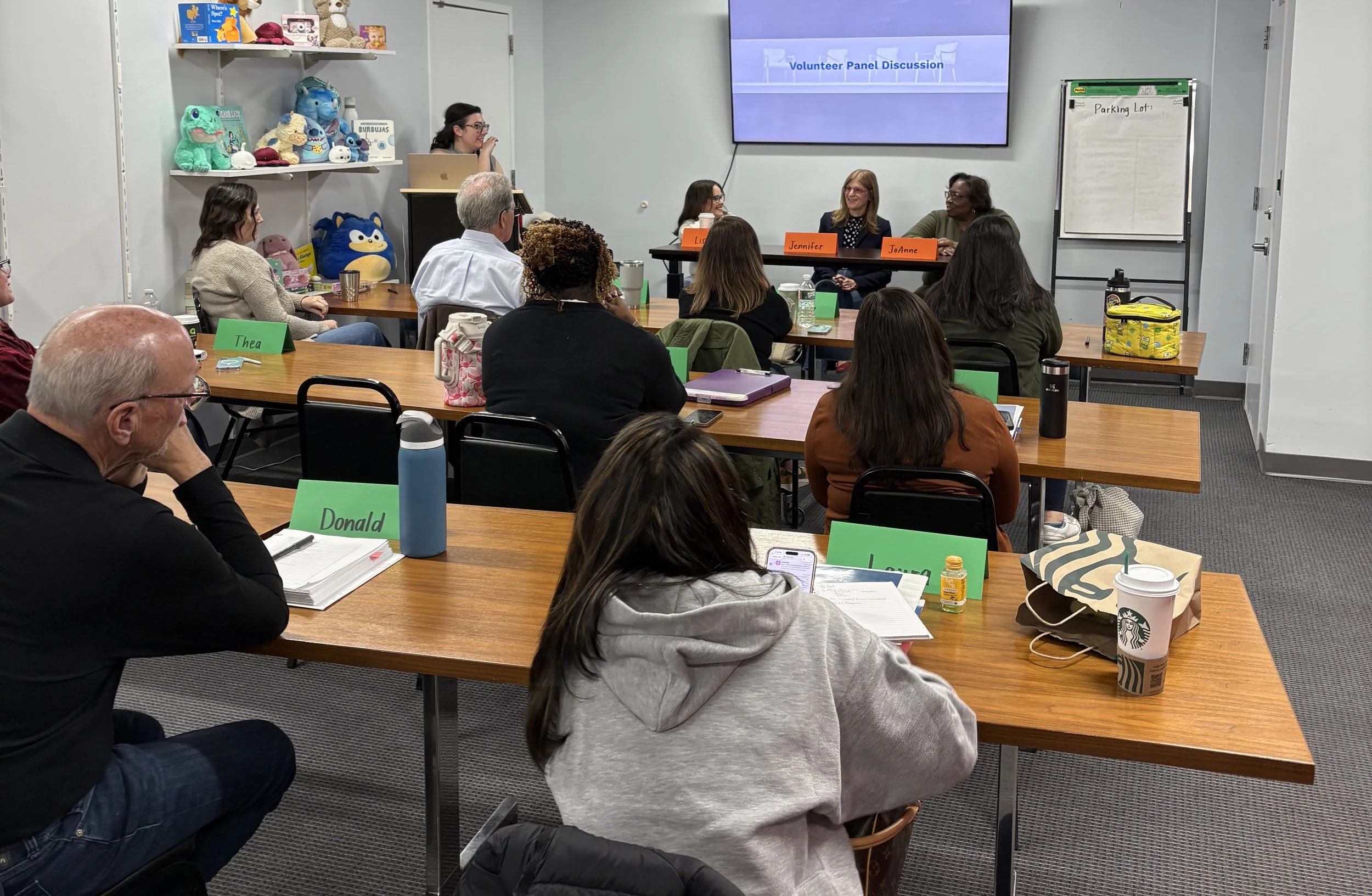
As the Training Coordinator at CASA of Passaic and Union Counties, I am responsible for running our training program for prospective Court Appointed Special Advocates. That training is called “pre-service training” and we have a class starting in May that still has availability!
Our training program consists of 30 hours of in-person class time, along with an in-person court observation and homework assignments. If this sounds like a lot, it’s because it is! We take the work that we do at CASA very seriously because the children and families that we work with deserve nothing less than the best.
Regardless of what professional background a prospective advocate has, we strive to ensure that by the time anyone completes our training program, they are prepared to work with their CASA child in an objective, professional, and supportive manner. CASA pre-service training is important and we want to make sure that our advocates feel as prepared as possible to take on the responsibility of their first case.
What is a CASA?
One common misconception that prospective advocates have is that the CASA role is that of a “mentor.” While a mentor could be vitally important for a child in foster care, the CASA role is distinct as it is directly tied to the family court system. As the “eyes and ears” of the family court system, CASAs are tasked with spending the bulk of their time contacting the adults their CASA child has regular contact with. CASAs have to make note of what the family court orders the parties in their case to do, and follow-up with the appropriate people to determine if those court orders have been followed.
Our prospective advocates review a myriad of topics during pre-service training. Those topics range from what the CASA role is, to topics intended to give prospective advocates a better idea of what CASA children may have experienced prior to entering the foster care system. Our goal is that our advocates have the ability and confidence to meet all of the monthly requirements of a CASA, which includes but is certainly not limited to, conducting regular in-person visits with their CASA child (or children).
CASA Training is Transformative
Our prospective advocates typically change and develop throughout the course of our training program – some people start out overconfident in their understanding of the CASA role, and others tend to be nervous and timid. Regardless of where a prospective advocate falls on that scale, virtually everyone in our pre-service training program wants to donate their time to advocate for a child in foster care. By the time prospective advocates complete our training program and get sworn-in by a family court judge, everyone has a more even understanding of what the CASA role actually entails. This brings us to … getting sworn-in as a CASA!
After completing our pre-service training program, our prospective advocates get sworn-in by a family court judge and officially get to remove “prospective” from their title! Our swearing-in ceremonies occur in-person at the courthouse and are led by one of the family court judges who preside over CASA cases. It is a very special moment where each new CASA will raise their right hand and repeat the oath of confidentiality and service, promising to fulfill their new role in an effort to ensure that a child’s best interest is kept at the forefront of each child welfare case.
Getting to see all of the hard work that our new advocates invested throughout the 36 hours of training makes swearing-in one of the most heartwarming and gratifying parts of my role as the training coordinator.